How to Unstick a Cocktail Shaker and Stop It Leaking
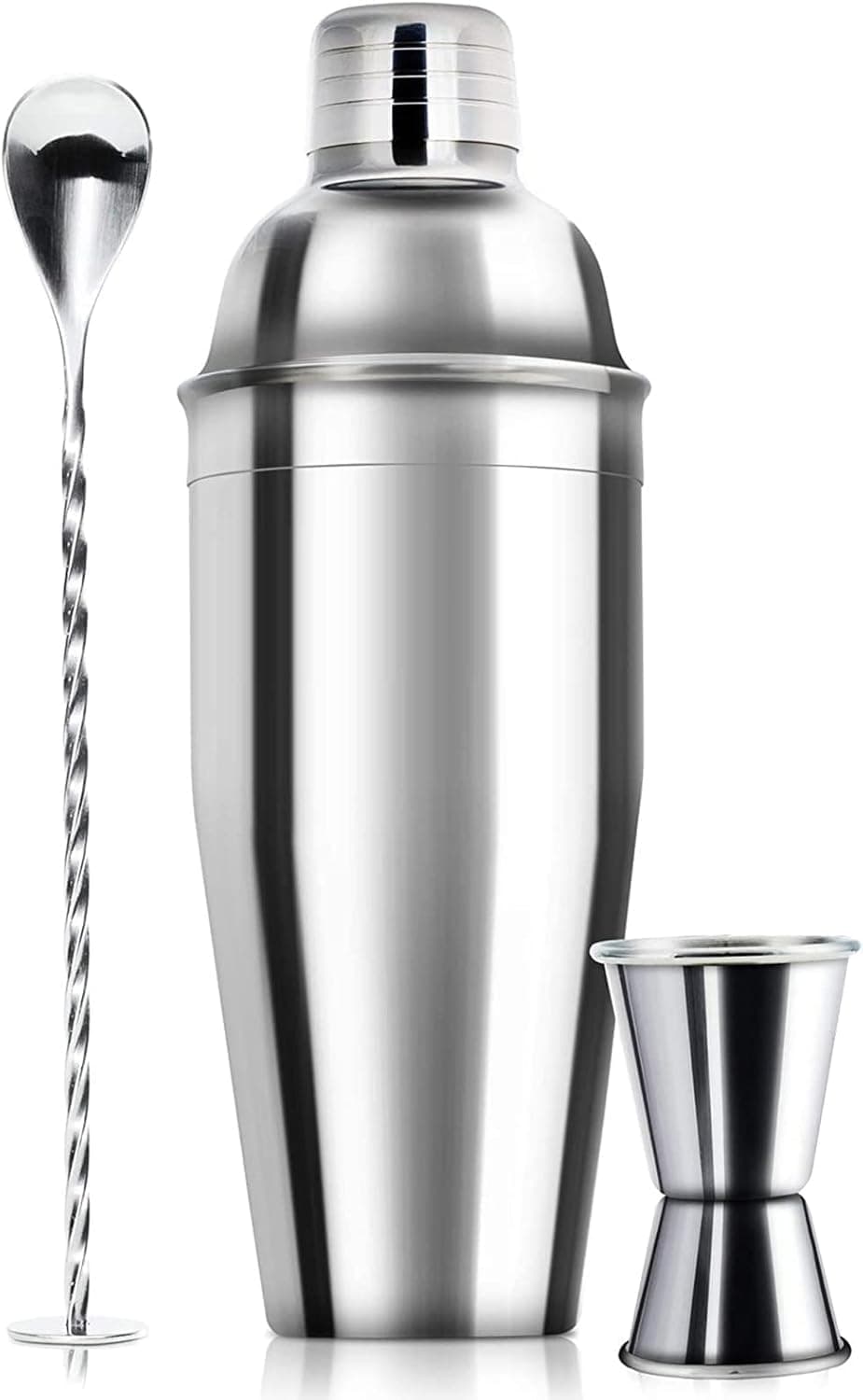
Almost everyone who makes cocktails at home eventually ends up with a shaker that will not come apart or one that sprays drink across the kitchen. Both problems come from the same physics: shaking with ice chills the metal, which contracts and creates a vacuum seal. Understanding how each shaker type seals makes them easy to control.
Why shakers get stuck
When you shake with ice, the air inside cools and contracts, and the metal of the tins contracts as well. This creates a partial vacuum that pulls the parts tightly together, which is exactly what keeps a two-piece shaker sealed while shaking.
Three-piece cobbler shakers are the most prone to jamming because the cap sits inside the strainer top and both contract at once. Boston shakers made of a glass and a tin can stick hard if the glass is pushed in at a steep angle.
How to open a stuck Boston or tin-on-tin shaker
Hold the shaker with the larger tin in your hand and the smaller tin angled toward you. Find the point where the rim of the small tin meets the side of the large tin at a gap, then strike the large tin firmly with the heel of your other hand just below that point. The seal breaks and the tins release.
If that does not work, rotate the shaker slightly and try again at a different spot. Avoid banging the shaker on the counter, which can dent tins or crack a mixing glass.
How to open a stuck cobbler shaker
Run the top of the shaker under warm water for a few seconds to expand the metal cap, then twist rather than pull. Gripping the cap with a rubber jar opener or a dish towel gives better leverage.
To prevent sticking, remove the cap soon after shaking, before the metal gets extremely cold, and avoid pressing the cap down hard. Cobbler shakers with threaded or silicone-sealed tops are less prone to jamming.
Stop leaks while shaking
Leaks usually come from a poor initial seal. With tin-on-tin shakers, place the small tin into the large one at a slight angle so one side touches the wall, then give it a firm tap with your palm. Try lifting the shaker by the small tin; if the large tin stays attached, it is sealed.
Dents and warped rims also cause leaks and sticking, so replace badly dented tins. Weighted tins designed to be used as a matched pair seal more reliably than mismatched cups.
Shake with good technique
Hold the shaker with one hand on each end, the small tin pointing toward you, so a leak or separation goes over your shoulder rather than at your guests. Shake hard for about 10-15 seconds until the outside of the tin feels very cold.
Fill the shaker with plenty of ice, since a half-full shaker allows more air and dilutes the drink faster. Open and strain promptly, and wash and dry tins after each session to keep rims clean and sealing well.