Jigger Measurements Guide
As an Amazon Associate I earn from qualifying purchases.
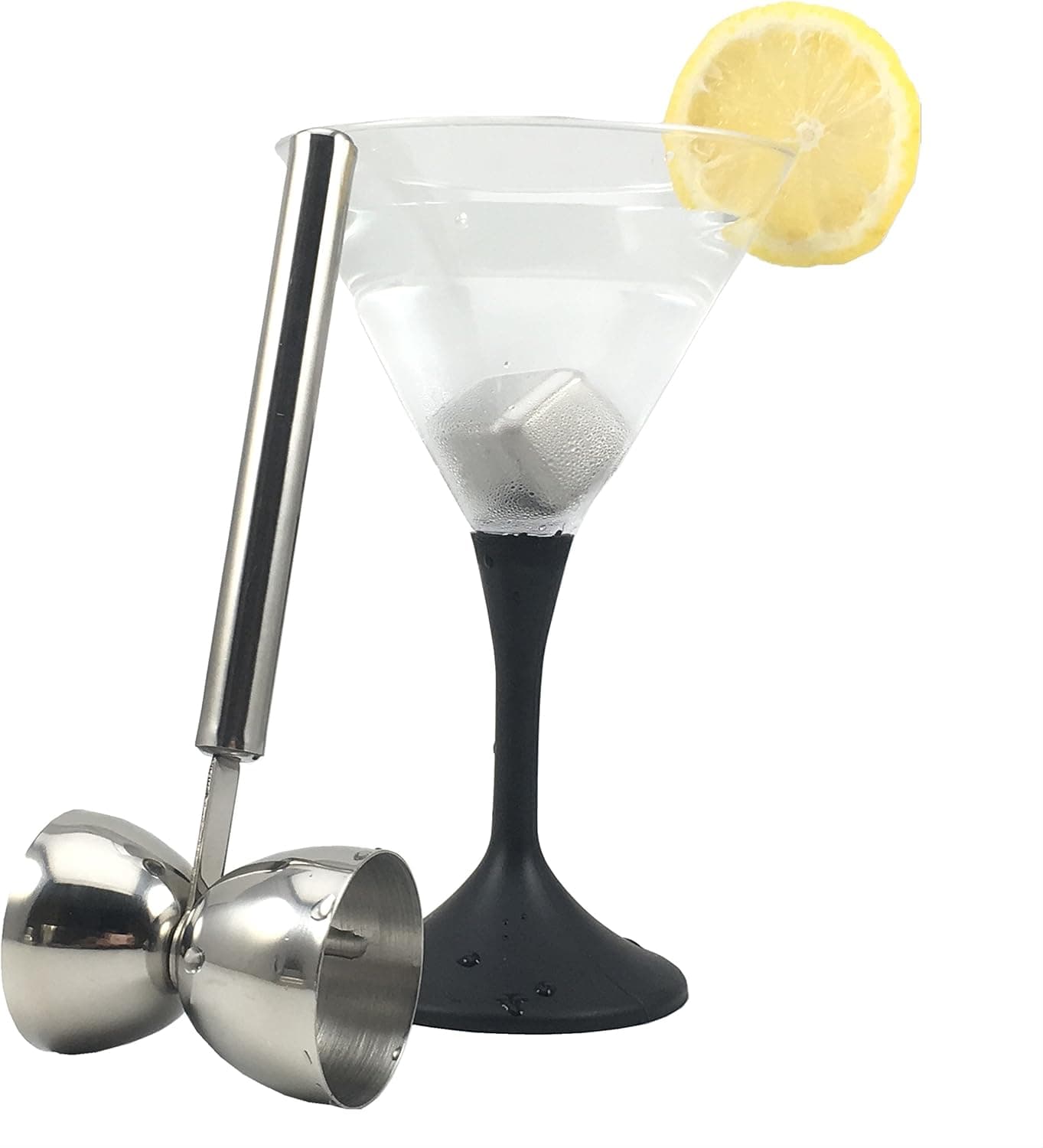
A double jigger has two cones: the common US size is 1.5oz on the large side and 0.75oz on the small, and "a jigger" historically means that 1.5oz measure. Sizes vary (2oz/1oz, 1oz/0.5oz), so check what your specific jigger holds before using it. Many have interior lines marking fractions. Fill to a slight dome held by surface tension for the true full measure, pour in one smooth motion, and hold it over the glass so any overflow still lands in the drink. The jigger is the small hourglass-shaped measuring tool that separates consistent cocktails from lucky ones. Free pouring looks impressive behind a busy bar, but at home a jigger is your fastest path to drinks that taste right every time. Understanding the common sizes and how to read them takes just a few minutes and pays off in every drink you make.
The double jigger and standard US sizes
A traditional jigger has two cones of different sizes joined at their bases, which is why it is often called a double jigger. In the United States, the most common configuration measures one and a half ounces on the larger side and three quarters of an ounce on the smaller side. The word jigger historically refers to that one and a half ounce measure, which is a standard single pour of spirit in many classic recipes.
Sizes vary, so check yours
Sizes do vary, and this trips up a lot of beginners. You will find jiggers with a two ounce large side and a one ounce small side, or a one ounce and half ounce pair, among others. Before you use a new jigger, actually check what your two cones hold, either from the packaging or by measuring water against a measuring spoon. Knowing your specific jigger prevents recipes from coming out too strong or too weak.
Interior fraction lines
Many quality jiggers include interior lines that mark fractions, and these are worth learning. A large cone might have a line at three quarters and another at one quarter of its full volume, letting a single side pour several different amounts. These markings turn one tool into a versatile measure, so hold your jigger up to the light and note where the lines fall before you start mixing.
Useful conversions for recipe reading
A few common conversions make recipe reading easier. Two tablespoons equal one ounce, and three teaspoons equal one tablespoon, so half an ounce is one tablespoon. If a recipe calls for a measure you cannot hit exactly with your jigger, these equivalents let you fall back on measuring spoons. Keeping a rough sense of these numbers in your head means you are never stuck when a recipe uses an unfamiliar unit.
Pouring technique
Technique matters as much as the tool. Fill the jigger right to the brim so the liquid forms a slight dome held by surface tension, which is the true full measure, and pour it in one smooth motion. Hold the jigger over the shaker or glass as you fill it so any overflow still lands in the drink rather than on your counter. With a little practice this becomes quick and almost automatic.
The real reason to measure: repeatability
The real reason to measure is repeatability. When a cocktail comes out perfectly balanced, measuring lets you make it exactly the same way next time, and when it comes out slightly off, precise amounts let you adjust with intention rather than guesswork. A jigger costs very little and lasts for years, and it may be the single tool that improves your drinks the most for the least money.
Frequently asked questions
How much is a jigger? Historically 1.5 ounces, which is a standard single pour of spirit in classic recipes. A double jigger pairs that with a smaller measure, most commonly 0.75 ounces in the US.
Are all jiggers the same size? No. You will find 1.5oz/0.75oz, 2oz/1oz, and 1oz/0.5oz among others, so check the packaging or measure water against a measuring spoon before using a new jigger.
How do I pour an accurate measure with a jigger? Fill it right to the brim so the liquid forms a slight dome held by surface tension, then pour in one smooth motion, holding the jigger over the shaker or glass as you fill it.
What is half an ounce in tablespoons? One tablespoon. Two tablespoons equal one ounce, and three teaspoons equal one tablespoon, which lets you fall back on measuring spoons when a recipe uses an unfamiliar unit.