Cocktail Glassware Guide
As an Amazon Associate I earn from qualifying purchases.
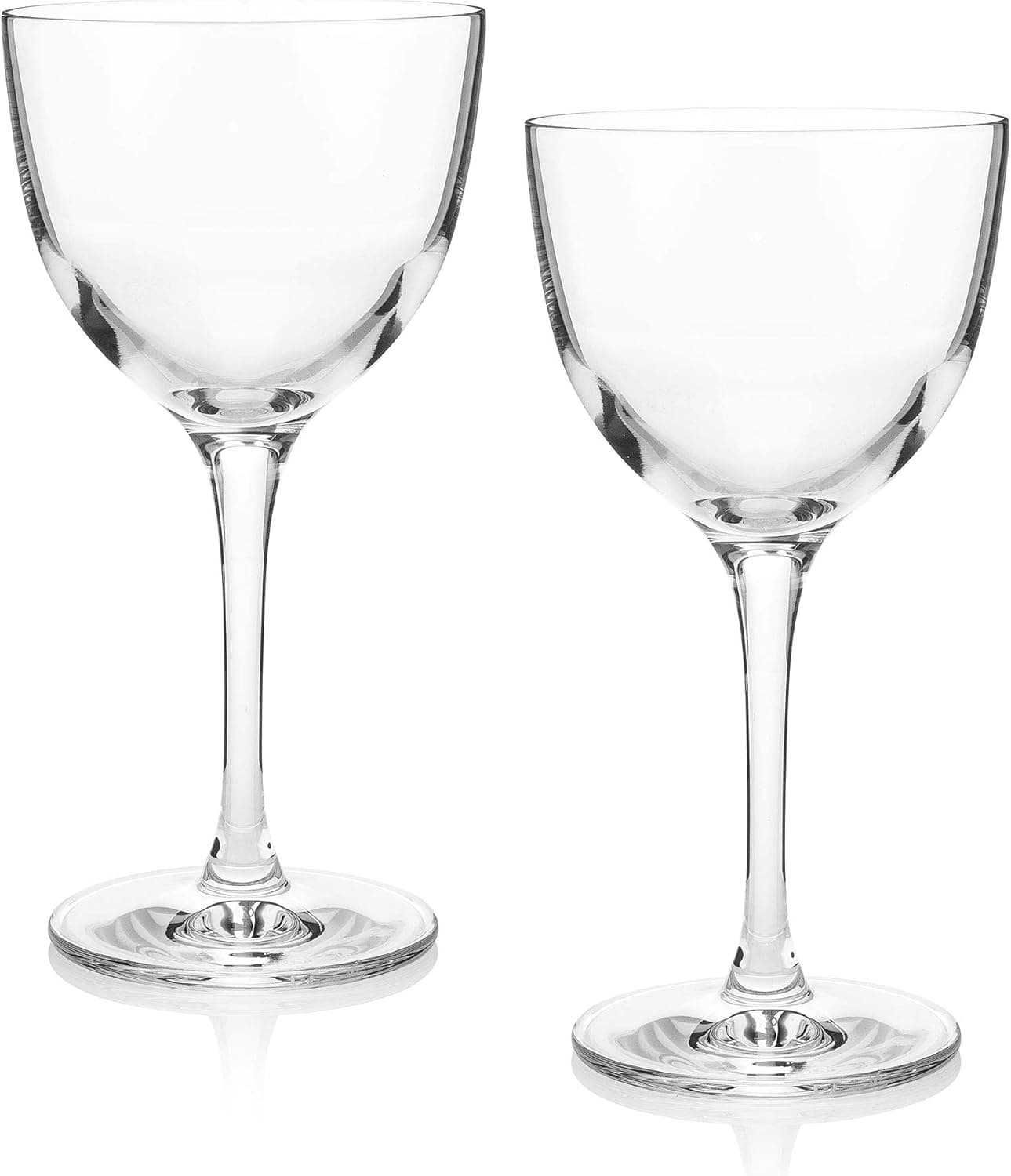
Glassware is easy to overthink and easy to underappreciate. The right glass does more than look good. It controls temperature, concentrates or releases aroma, and signals what kind of drink you are about to enjoy. You do not need a cabinet full of specialty shapes, but understanding the main types helps you serve drinks the way they are meant to be experienced.
Start with the rocks glass, also called an Old Fashioned or lowball glass. It is short, wide, and sturdy, built for spirit-forward drinks served over ice like the Old Fashioned and the Negroni. The wide mouth lets aromas rise to your nose, and the heavy base feels satisfying in the hand. A set of these is arguably the most useful glassware you can own, since they also work fine for a simple pour of whiskey.
The highball glass is its tall counterpart, made for long, refreshing drinks topped with soda, tonic, or juice. Think gin and tonic, Tom Collins, or a Paloma. The height keeps the bubbles lively and leaves room for plenty of ice, which keeps everything cold. A slightly narrower and taller version called a Collins glass does the same job, so either style covers your fizzy drinks.
For drinks served up, meaning shaken or stirred with ice and then strained into a chilled glass without ice, you have a few options. The coupe is the wide, shallow, stemmed glass that has become a modern favorite. It suits sours, daiquiris, and any shaken cocktail, and it is far less prone to spilling than the classic V-shaped Martini glass. The stem keeps your warm hand away from the cold drink.
The Martini glass, with its dramatic V shape, is iconic and still lovely for a Martini or Cosmopolitan. Be honest with yourself about spills though, since its wide angled bowl tips easily. The Nick and Nora glass splits the difference beautifully. It is stemmed like a coupe but with a gently rounded bowl that holds aroma well and resists sloshing, making it a favorite for stirred classics.
A couple of specialty glasses are worth mentioning as you grow. The wine glass and the copper mug show up in specific drinks, the mug most famously for the Moscow Mule, where it keeps the drink icy cold. A flute preserves bubbles in Champagne cocktails. None of these are essential on day one, but they are nice additions when a particular drink calls for them.
If you are building a collection from scratch, buy rocks glasses and coupes first, then add highballs. That trio covers the vast majority of cocktails a home bartender makes. Choose clear, moderately thin glass without heavy decoration so the color of the drink shows through, and buy in sets of four so you are always ready to pour a round.