NewAir 60 Can Beverage Refrigerator, Compact Mini Fridge with Glass Door Review (2026)
Updated September 21, 2026 · Research-based review
Our verdict
A good pick for anyone who wants a stocked, visible home bar fridge without giving up a full-size unit. The glass door and 60 can capacity make it easy to see what is cold, but it needs open space around it to vent properly.
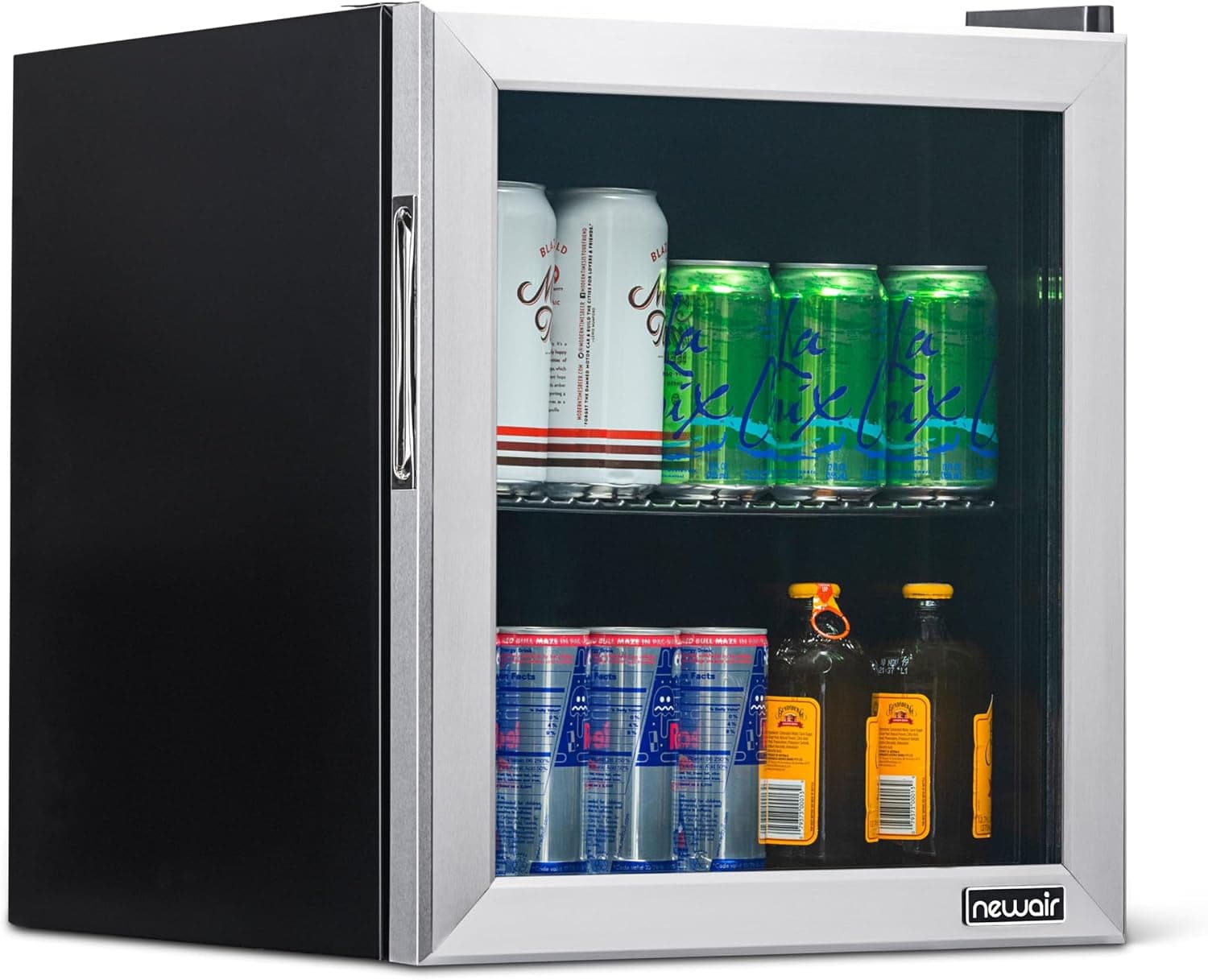
NewAir's 60 can beverage refrigerator, a compact glass door mini fridge for a stocked home bar.
Price range: See on Amazon
What we liked
- + 60 can capacity keeps plenty of mixers and beers cold
- + Glass door shows contents without opening the fridge
- + NewAir specializes in beverage and wine coolers
Trade-offs
- - Glass doors are less insulating than solid doors
- - Needs ventilation space around the unit, so it cannot be boxed in
What it is built for
This is a freestanding compact refrigerator sized for beverages rather than food, holding up to 60 standard cans (or an equivalent mix of bottles) behind a reversible double paned glass door. It suits a home bar, game room, or office nook where guests can grab a cold drink without opening the kitchen fridge. NewAir builds a wide line of beverage and wine coolers, so this model draws on the same compressor cooling and shelving approach used across the brand, rather than being a one-off design. The compact footprint, listed around 16.75 inches wide, 18.9 inches deep and 21.1 inches tall, lets it slide into a bar cart nook, a corner of a kitchen counter, or a finished basement bar without dominating the room. At roughly 37 pounds it is light enough for one person to position and level.
Cooling performance and controls
The unit uses a compressor system with R600a refrigerant rated to cool the interior across a 37 to 64 degree Fahrenheit range, adjustable through a set of thermostat presets rather than a single fixed setting. That range covers everything from lightly chilled mixers to properly cold beer and soda, which matters for a bar fridge that may hold mixers, garnish syrups, and canned drinks at once. NewAir lists the compressor noise at around 39 decibels, which is quiet enough for a living room or office rather than a garage. Power draw is rated around 85 watts, in line with other compact compressor coolers of this size. Because it uses a compressor rather than thermoelectric cooling, it holds temperature more consistently in a warm room than cheaper thermoelectric mini fridges, though it does generate some vibration and fan noise typical of compressor units.
Storage layout and glass door
Inside, the fridge uses a single adjustable or removable metal shelf, so the interior can be reconfigured for taller bottles or left open for stacking cans. The double paned glass door is reversible, meaning the hinge can be swapped to open from either side depending on where the fridge sits relative to a counter or wall. Glass doors let guests and the host see what is stocked without opening the door and losing cold air, which is convenient for a self-serve bar setup. The tradeoff is that glass insulates less effectively than a solid foam-filled door, so the unit works a bit harder to hold temperature in a warm room, and the door surface will show fingerprints and condensation more readily than a solid panel.
Placement and ventilation needs
Like most compressor-based beverage refrigerators, this model needs clearance around the back and sides to exhaust heat from the compressor and condenser coils. It is designed as a freestanding unit, not a built-in, so it should not be enclosed in a cabinet or boxed in on multiple sides without a ventilation gap, or the compressor can run hotter and less efficiently over time. Buyers planning to slot it under a counter or inside built-in cabinetry should check clearance requirements first, since doing so without airflow can shorten the compressor's working life and reduce cooling performance in warm rooms. This is a normal limitation of compressor coolers generally, not unique to this model, but it is worth planning for before purchase, especially in a finished bar build where the fridge is meant to look built-in.
Who should buy it
This fridge fits someone building out a home bar who wants a dedicated, visible spot for beer, seltzer, and mixers separate from the kitchen fridge, and who has a few inches of clearance to spare around the unit. The 60 can capacity is a practical middle ground, larger than tiny six-can desktop coolers but smaller than a full undercounter beverage center, and NewAir backs it with a 2 year warranty. It is less suited to anyone needing a built-in, flush-mounted look, or anyone in a very warm, poorly ventilated space where a compressor unit will run harder. For a freestanding accent piece next to a bar cart or home theater setup, it covers the basics well at a reasonable size and price point.
Frequently asked questions
How many cans does the NewAir 60 can fridge actually hold?
It is rated for up to 60 standard 12 ounce cans, though actual capacity drops a bit if you mix in bottles, which take up more shelf space.
Can this fridge be built into cabinetry?
No, it is designed as a freestanding unit and needs open space around it for the compressor to vent properly, so boxing it in on multiple sides is not recommended.
What temperature range does it cool to?
The thermostat covers roughly 37 to 64 degrees Fahrenheit across its preset settings, cold enough for beer and soda or a milder setting for mixers.
Is the glass door a problem for keeping drinks cold?
Glass insulates a little less than a solid door, so the compressor cycles more to hold temperature, but the double paned construction is designed to offset most of that difference.
Prices change often, so check the current price and availability on Amazon.
Check price on AmazonCocktail Gear Hub may earn a commission from the link above.