Liquid Intelligence: The Art and Science of the Perfect Cocktail (Dave Arnold) Review (2026)
Updated September 14, 2026 · Research-based review
Our verdict
Liquid Intelligence is Dave Arnold's technical guide to why cocktails taste the way they do, covering dilution, chilling, carbonation and clarification. It rewards curious bartenders willing to read closely and sometimes buy specialty gear, but its density can feel heavy for someone who just wants quick recipes.
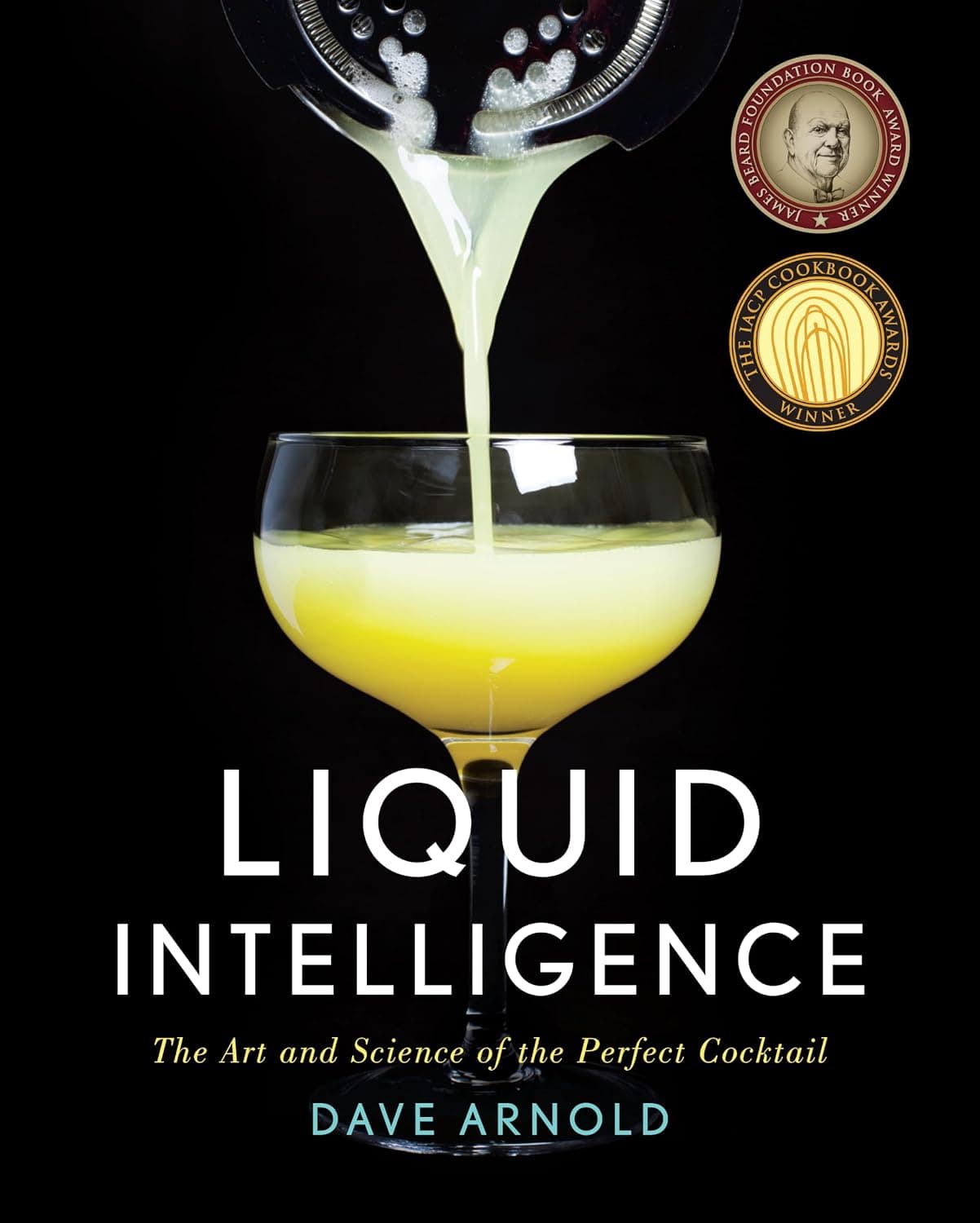
Liquid Intelligence by Dave Arnold, a deep dive into the art and science of the perfect cocktail.
Price range: See on Amazon
What we liked
- + Explains the science behind dilution, chilling and carbonation
- + Dave Arnold's techniques inspire advanced experimentation
- + Great for home bartenders who love the why behind drinks
Trade-offs
- - Technical content can feel dense for casual readers
- - Some techniques require specialty equipment
Who should pick up this book
Liquid Intelligence is written for home bartenders and professionals who want to understand the mechanics behind a good cocktail, not just a list of ratios to follow. Dave Arnold, known for his work at Booker and Dax and his background in food science, spends much of the book explaining why techniques work the way they do, covering topics like ideal dilution levels, chilling speed and carbonation. Readers who already enjoy the science side of cooking or brewing, and who like knowing the reasoning behind a recipe rather than just following it, tend to get the most value here. Someone looking for a simple, browsable recipe book to flip through for a party is likely better served by a more straightforward recipe collection, since this book asks for more sustained attention and occasionally a notebook nearby.
What the book actually covers
The book runs 416 pages and was published by W.W. Norton, and it is organized around the core variables that shape a cocktail's texture and flavor, including dilution, temperature, carbonation and clarification techniques. Arnold explains the physics and chemistry behind why stirring versus shaking changes a drink's texture, how ice size and shape affect dilution rate, and how to build carbonated cocktails at home, among other topics. The book won the James Beard Award for Best Beverage Book and the IACP Jane Grigson Award, recognition that reflects its depth and influence on the cocktail world since it was first published. Because the material goes well beyond basic recipes, it also touches on specialty techniques, such as centrifuging and using tools that go beyond what a typical home bar stocks, for readers who want to push further.
Reading it as a working reference
In practice, this is less a book you read cover to cover in one sitting and more a reference you return to as questions come up, whether that is why a drink tastes over-diluted or how to get better carbonation in a homemade tonic. The technical depth means some sections benefit from a second read once you have tried the technique yourself and have a concrete question in mind. Readers who follow along closely often find themselves wanting equipment beyond a standard shaker and jigger, since some of Arnold's more advanced techniques call for tools like an immersion circulator or a whipped cream charger for carbonation, which is a real time and cost commitment for a home setup. For the payoff of genuinely better drinks and a clearer understanding of the why, many readers find that investment worthwhile.
How it compares with other cocktail books
Compared with Cocktails Illustrated from America's Test Kitchen, which focuses on testing and refining classic recipes for a broad home audience, Liquid Intelligence leans much further into the underlying science rather than recipe testing. Cocktail Codex organizes drinks around six foundational templates and is more approachable for someone who wants a structural way to think about building recipes without the deeper technical detour. Death & Co's Welcome Home and Modern Classic Cocktails both lean toward curated recipes with professional bartending technique explained along the way, which suits readers who want strong recipes first and theory second. Liquid Intelligence sits at the technical end of this group, valuable for the reasoning it provides but denser than any of these more recipe-forward books.
Verdict and who might want a different book first
This is a rewarding read for anyone serious about understanding cocktails at a mechanical level, and our score of 8.6 out of 10 reflects its depth and influence weighed against how demanding it is for casual readers. Choose it if you already make cocktails regularly and want to know the reasoning behind technique, or if you enjoy the science side of food and drink generally. Start with a more recipe-focused book instead if you are new to making cocktails at home and want quick wins before diving into the underlying chemistry and physics that Arnold covers in such detail. As a second or third cocktail book on a shelf, it has few equals for depth.
Frequently asked questions
Is Liquid Intelligence good for cocktail beginners?
It can be dense for someone brand new to making drinks, since it focuses heavily on the science behind technique rather than simple step by step recipes, so many readers find it more rewarding after they already have some basic cocktail experience.
How long is Liquid Intelligence?
The book runs 416 pages and was published by W.W. Norton in November 2014.
Has the book won any awards?
Yes, Liquid Intelligence won the James Beard Award for Best Beverage Book and the IACP Jane Grigson Award.
Do I need special equipment to use the techniques in this book?
Some of the more advanced techniques, such as carbonation and centrifuging, call for specialty equipment beyond a standard home bar setup, though many of the core lessons on dilution and chilling apply with basic tools.
Prices change often, so check the current price and availability on Amazon.
Check price on AmazonCocktail Gear Hub may earn a commission from the link above.